Wednesday, May 20, 2015

Metro Tech Foundation's Sixth Banquet & Awards

Metro Tech's 6th Annual Foundation Banquet was another huge success. The personal stories of students recognized often were amazing. Various foundation expenditures include student scholarships, grants, and recognition.The financial reporting on how foundation funds are deployed to help keep students in school and/or launch them into their first jobs would make even the smallest donor proud.

If you are unfamiliar with this model foundation, the first Metro Tech Seeds of Hope Banquet we attended is chronicled at http://okmentor.blogspot.com/2013/06/model-foundation-mentoring-program.html

Partnerships and innovation focus upon increasing opportunities for Metro Tech students. For example, the Lunch & Learn program is 10-week opportunity for students to eat lunch and learn life skills. At the end of the session, Tinker Federal Credit Union establishes a savings account with $100 for each L&L "graduate."

Students along with faculty and staff also are fundraising for the foundation. The student-designed and executed Zombie Dash 3K generated so much fun on campus as well as revenue that it is being expanded as an annual event. Students, faculty, and staff also have restaurant nights at places like Johnnie's, a beloved area hamburger restaurant.

One of the Rock Stars of the Metro Tech Foundation

Ruben Aragon received the Don R. Wright Award, explained below. Mr. Aragon was the architect of increased fundraising but more importantly the policy of not hoarding foundation funds. He envisioned the foundation's spending to assist students who needed a hand up in order to finish their education. That need might be a new tire, a utility payment, or other. Mr. Aragon through his leadership and vision has done so much more to change the lives of the Metro Tech students and enhance Metro Tech in general. Bravo!


Ruben Aragon


Don R. Wright Award 

Don Wright was a charter member of the Metro Tech Board of Education. He was a WWII hero and a member of what some call the greatest generation. His war memoirs can be found on display at the Oklahoma Historical Society.  The award is given for outstanding board service to an outgoing member of the Metro Tech Foundation Board of Trustees who exemplified a spirit of  energy, leadership, and commitment to helping make a difference. The past recipients awarded by the foundation have been Tom Hill, Pat Potts, Dick Beshear, Jan Carroll and Barbara Batchelor. 

Foundation Information 


Program Cover & Officials


Agenda & Honorees 


A Little More We Learned

Community Service Participation Initiative

Metro Tech also sponsors a Community Service Participation Initiative through which students, faculty, and staff host blood drives, participate in United Way fundraising efforts, and volunteer for area nonprofits with high community impact. This initiative is one of various learning opportunities.
Billie Smith, community relations/social media specialist for Metro Tech, wrote:
[The Community Service Participation Initiative is] aimed at engaging stakeholders while positively impacting the local, state and national community. Community service projects are built into the curriculum to stimulate a sense of teamwork among employees and students as they choose community service sites and volunteer together, giving teachers the opportunity to connect more with students on a more personal level. Students show citizenship, make a difference and learn the value of giving back as they apply soft skills acquired in the classroom to real-life situations, bringing the Metro Tech Mission to life.
http://www.okethics.org/assets/Awards/CommunityImpact/metro%20tech%202014%20community%20impact%20award.pdf    Ret. 5-6-15

Donation of a Car (excerpts from a Newsok.com article)
Metro Tech Executive Officer Matt Campbell lost his wife, Jessica, in a traffic accident.


In December, Campbell announced the donation of his late wife’s car, a 2009 Toyota Corolla, to the Metro Tech Foundation, a nonprofit established to assist students during financial hardship.
The foundation received 67 eligible student applications that were placed into a blind draw. Application criteria included a steady income, valid driver’s license and ability to secure automobile insurance.
Before the winner was announced, Campbell addressed the crowd of students.
“I am also a Metro Tech graduate who had transportation issues getting through school. I know Jessica would want her car to help a student here overcome that struggle,” he said.
The winning student, Samiyah Dungee, a second-year adult cosmetology/nail technician student, works part-time and attends classes at Oklahoma City Community College and Metro Tech.

http://newsok.com/oklahoma-city-metro-tech-leader-gives-car-to-student/article/5383187 


Minh Ton
Minh Ton, recipient of the 2014 James D. Branscum Scholarship, spoke at the banquet. Each year the stories of the achievements and drive of all of the honorees are amazing. A former Metro Tech biomed student, Minh is focused upon becoming a dentist. She came to America at age 10. 
http://metrotech.edu/news/biomed-student-wins-prestigious-clara-luper-scholarship 

People Photos


Jimmy McKinney, Metro Tech Board of Education and president of McKinney Heat & Air, Inc.,; Jennifer McKinney, Jimmy's wife; Elizabeth Richards, Metro Tech Board of Education and attorney and counselor at law, Richards Law Firm; Bob Parrish, associate superintendent of business & operational services and Metro Tech Board of Education treasurer, Metro Tech Centers


Cecilia Robinson, Ed.D., Superintendent of Millwood Schools, and Liz Guerrero-Lee, Community Outreach and Parent Resource Coordinator at Metro Technology Centers. Guerrero-Lee is also a mentor in the Oklahoma ArtScience Prize.


Applause for Cindy Friedemann, chief officer for strategy and market development at Metro Technology Centers! She produces results in a pleasant way.


New MTF Fundraiser - First Golf Tournament


Cookies!


Although we do not advertise for those marketing to mentoring groups, we would be remiss not to mention these cookies on the tables at the fundraising luncheon. Seriously, they melt in one's mouth! These were packaged take-a-ways under tiered individual desserts. Not a cookie was left anywhere. We all looked!


If you have never attended one of the Metro Tech Foundation banquets, you should. We all left feeling proud of Metro Tech, warmed by the students' stories of focus and accomplishment, and satisfied with how our donations are being spent.

http://www.metrotech.edu/


Wednesday, May 13, 2015

A Hawaiian Way, Juvenile Justice

This approach has a cultural component often used by mainland Native American mentoring programs. Listening, learning root causes, physical activities, and other interventions make this applicable anywhere. 

A ‘More Hawaiian' Way To Deal With Delinquent Kids


Angry. Frightened. Sad.

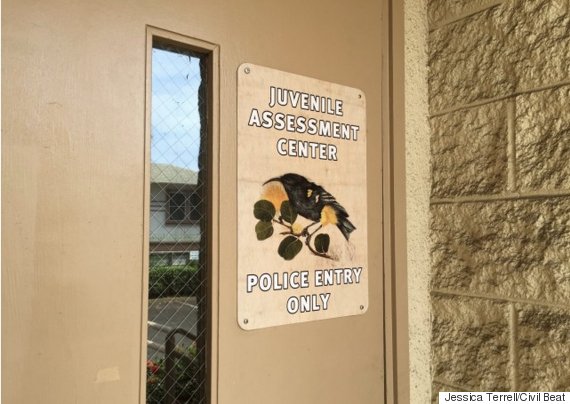
When teenagers are marched in handcuffs through a discreet back entrance at the Susannah Wesley Community Center in Kalihi — or walk through the front door with their parents clutching a police citation — they display a range of emotions.

Mostly they are alienated and calling out for help, case workers say, desperate enough to take a chance on a new program that offers them both the promise of assistance and a clean slate.

The community center is part of the Ho’opono Mamo Civil Citation Initiative, a pilot program launched in Honolulu this spring.

For the next year and a half, first-time juvenile offenders busted for minor law violations in Honolulu’s 5th Patrol District — which includes the neighborhoods of Kalihi, Liliha, Nuuanu and Punchbowl — will be given the option of going to the center instead of going to court.

“These kids don’t need to be criminalized,” said David Hipp, executive director of the Office of Youth Services. “They need to be helped.”

entrance

The program is an attempt to provide more immediate intervention services by focusing on strengthening teens’ connection to their families and community.

It’s a new way of doing things based on love and healing and community collaboration, that is changing the juvenile justice system to be “more Hawaiian,” said UH Professor Karen Umemoto.

There’s also a big cultural component, including a new 21-day residential healing retreat for teens centered around Native Hawaiian traditions and ho’oponopono, or “making things right.”

The initiative is the latest step in a sweeping overhaul of the juvenile justice system in recent years.

Advocates of reform say they are trying to fix a system that is too punitive when it comes to minor crimes, doesn’t offer enough services to address the root causes of delinquency, and arrests Hawaiian and Pacific Islander teens at a far higher rate than their peers.

“As a community we have some serious issues with respect to kids that are not being addressed,” Oahu Senior Family Court Judge R. Mark Browning said. “Kids should be our number one priority, and sometimes they are not.”

Plentiful Arrests for Minor Crimes
Compared to large cities on the mainland, Honolulu doesn’t have much of a hardcore juvenile crime problem.

The city — and the state— posts a relatively low rate of felonies and violent crimes for both juveniles and adults. But the state arrests kids at a much higher rate than national average for so-called “status offenses” — acts that would not be criminal for adults, such as truancy, curfew violations, running away from home or being “beyond parental control.”

Truancy or other status offenses were responsible for more than half of the 8,818 juveniles arrests on Oahu, Maui and Hawaii Island in 2014. Statistics for Kauai were not available because of a recent switch in computer systems. Nationally, status offenses made up just 18 percent to 20 percent of juvenile arrests.

“We have a very large population of youth who are involved in the juvenile justice system for very low-level crimes or offenses,” Umemoto, one of the researchers who will be studying Ho’opono Mamo’s results, said. “I think we have found that the practice has been to treat minor level or low level status offenders in ways that in other states more serious violent offenders are treated.”

There are also big racial disparities among youths the state is arresting and locking up.

2012 study by University of Hawaii researchers, including Umemoto, showed that Hawaiian and Pacific Islander youths are arrested at a much higher rate than their peers. The study also found that once arrested, Native Hawaiian and Pacific Islander youth were more likely to receive harsher decisions than their white and East Asian (Chinese, Japanese and Korean) peers.

Though family court judges made a decision several years ago not to sentence teens to jail for status offenses, more than half of the teens sent to the Hawaii Youth Correctional Facility in 2013 had committed misdemeanors.

And locking up a teen in Hawaii is costly. In 2013, the state spent $199,320 for each bed in the HYCF.

One big driver of reform in recent years has been the Hawaii Juvenile Justice Working Group, which includes representatives from HPD, the Office of Youth Services, Family Court, and various community groups.

House Bill 2490, which was signed into law last summer as Act 201 and based in part on recommendations from the group, calls for a 50 percent reduction in the number of juveniles locked up over the next five years.

There is still, however, only one residential facility in the state where judges can send teens dealing with substance abuse issues, and no real residential option for those dealing with mental health issues, Browning said.

Of the roughly 5,000 kids who have a court date in Oahu each year, Browning estimates 80 percent are battling some form of addiction.

The biggest issue, Browning says, is that the justice system doesn’t do enough to address trauma — something the working group is trying to change through the new Ho’opono Mamo initiative.

“We have moved to a trauma-informed care system,” Browning said. “But you have to figure out what the trauma is, and that’s not something we were really aware of eight or 10 years ago.”

And because so many of the teens entering the juvenile justice system are Hawaiian, new programs need to take a more holistic and cultural approach, the working group said.

Immediate Action
Not every teen picked up by HPD in Kalihi qualifies for the pilot program.

Teens have to be first-time offenders busted for minor crimes. And they have to choose to participate.

Once they do, the police either take them to the assessment center at the Susannah Wesley Community Center or issue them a citation directing them to show up at the center the next day.

The immediacy is a big deal, say members of the Juvenile Justice Working Group, because teens often need help when they are arrested and possibly in crisis — not months later when they have a court date.

Staff members were expecting one or two teens a week to sign up for the program, said Ron Higashi, executive director of the Susannah Wesley Community Center. Instead, there’s been more than one teen a day on average since opening in mid-March, and the center is hiring additional staff.

The first step is just listening to the kids and trying to find out what’s going on, before matching teens with local service organizations.

“We want to know how is your family life? How is your social life?” said assessment center program director Shelly Guira. “We also talk about trauma history, legal history.”

Guira and her staff also talk to parents before helping to create a plan for the teens that could involve substance abuse treatment, family counseling, education programs, or emergency shelter for runaways. Sometimes it will mean matching teens with a local kupuna or elder who can mentor them in getting on a different path.

An overarching goal is also to get the teens to set personal goals for themselves for anything from dealing with bullying and peer pressure to improving grades.

Getting teens to feel more connected to their family and the community is also a big part of the program. To do that, some will now be referred to a 21-day residential program in Waianae that opened last weekend.

A Cultural Approach
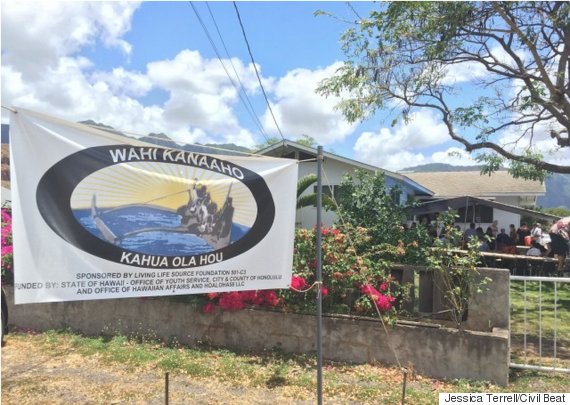
wahi

Wahi Kanaaho is a three-week program tied to the phases of the moon and centered on finding balance and spiritual healing.

The curriculum, created by Juvenile Justice Working Group member and substance abuse counselor Wayde Lee, combines hands-on activities like fishing and farming with reflective individual and group work.

“I teach them how to take care of the ocean, take care of the land, and then the same way they do that take care of themselves,” Lee said.

The new residential center in Waianae is located in a plain white house donated temporarily by a local church. Teens will come to Waianae in small, single-gender groups for self-reflection exercises and lessons in Native Hawaiian cultural values and healing practices.

Wahi Kanaaho staff member Jazlyn Wandasan says the idea of culture-based healing can perhaps be best compared to art therapy. Activities like cleaning out taro patches can be used as a way of getting teens to reflect on their own healing and cleansing.

The program may be new, but the concept is old, said Kehaulani Lum of the Living Life Source Foundation, which is helping fund the program.

“It’s a reawakening of traditional knowledge,” Lum said.

For the next year UH researchers will pore through data from the assessment center to try and quantify whether the program is successful in reducing recidivism and improving the teens’ social and emotional well being. They will look at arrest records, before and after surveys from the teens, and school records — if parents give them permission for that.

Lee has a simpler metric for measuring success.

The imposing and heavyset man looks for two things from teens by the time they leave his program: How in touch they are with their own emotions during a meeting with their parents at the end of the program, and whether they stop of their own accord on a nature walk to pick up an item of rubbish that he discretely places along the path ahead of time as a test.

If they cry during the meeting with their parents, he knows they are in touch with their feelings. If they notice the trash and pick it up, they have malama aina and a sense of their place in the world.

And if they have both of those, Lee says, “I know they are going to be OK.”

Preliminary results on the pilot program will be compiled at the end of the year.

http://www.huffingtonpost.com/2015/05/07/hawaii-delinquent-kids-program_n_7237728.html
Ret. 5-13-15

Friday, May 8, 2015

Mentoring and Perennials Analogy, Rhodes

Another must read from the Chronicle of Evidence-Based Practices...
By  May 7, 2015 

On Mentoring and Perennials

Screen Shot 2013-06-28 at 9.41.36 AMBy Jean Rhodes and Belle Liang.
Spring is in the air in Boston and the flowers are finally beginning to bloom, so it seems like as good a time as any to share with you a commentary on mentoring that draws inspiration from gardening. It’s an updated version of a column that was written with my friend and colleague Professor Belle Liang, and a version appeared in Applied Development Science. As we note, since the goal of mentoring is the establishment of an enduring relationship with lasting benefits, a mentoring relationship is more like a perennial than an annual. With this in mind, we draw on the wisdom of perennial gardeners to set forth six principles of mentoring – akin to preparing the soil, seeding, weeding, feeding, persevering, and evaluating for the next growing cycle as set forth in Strauss’ (2006) The Gardening Analogy.
Lesson One: Prepare the soil – “As with most gardening projects, planning and preparation is best begun well ahead of planting time” (Strauss, 2006, p. 1).
In mentoring, preparing the soil involves pre-match preparation and training for volunteers, as well as for youth. Pre-match preparation may start with early identification of individuals who are not a good fit for mentoring work. That is, close, effective mentoring relationships seem to be facilitated when adults possess skills and attributes including: prior experience in helping roles or occupations, an ability to demonstrate appreciation of salient socioeconomic and cultural influences in the youth’s life (Hirsch, 2005), and a sense of efficacy in mentoring young people.
Besides pre-screening and selection, programs can also act proactively by setting appropriate expectations for the mentoring role, processes, and outcomes. For example, many mentors expect that an immediate bond will develop with their mentees and that the balance of the experiences will be more “fun” than work, or they assume their mentee will be grateful for the many sacrifices that the volunteer has made on his or her behalf. Such expectations can lead mentors to feel disappointed, unappreciated, and even exploited, especially early in the relationship. Young people are often brought into a mentor program because they have had unsatisfactory relationships in the past, and they may not know how to engage in a mutually satisfying friendship. Alternatively, adequately conveying to volunteers what they can expect from their mentee, the relationship, and the roles of each partner, as well as the difficulties that they might encounter can prevent some of these disappointments. Some practitioners have argued that such “full disclosure” might amount to scaring away potential volunteer recruits and, indeed it would be a mistake to delve into every possible way that a relationship can go awry. Yet, the pendulum has swung too far in the other direction, where, in an effort to recruit more volunteers, many programs overemphasize the enjoyable, social aspects of the endeavor. Despite these messages and expectations emphasizing the “fun” aspects of mentoring, the fact is, volunteers who work on youth development issues have reported other motivations for their involvement, especially the desire to increase their understanding of themselves, others, and the world around them. Ultimately, when the actual experience of mentoring aligns with their motivations or expectations, volunteers are less likely to drop out prematurely.
Lesson Two: Seed – “Plant the seeds and seedlings in the soils that match variations in their conditions” (Strauss, 2006, p. 1).
Finding the right fit between volunteers and youths is critical to the longevity and outcomes of the match. Mentors and youth come with different backgrounds, personalities, expectations, and skill levels; matching and training should take these differences into account. Mentees typically represent diverse demographics, including boys and girls who differ by racial and ethnic minority background, socioeconomic status, disability, and religion. Although the research does not necessarily indicate that mentors must be matched on these dimensions, studies do show the importance of a basic compatibility between the youth and mentor in their personalities, interests, and expectations or goals for the relationship.  In addition, close emotional connections between youth and mentors appear to be fostered by factors resembling those identified as important in effective therapeutic relationships – mutual empathy and authenticity as well as basic compatibility and enjoying each other’s company.
Lesson Three: Weed – “Remove weeds and other competitive threats (Strauss, 2006, p. 1).
Not everything that sprouts in a garden belongs there and, likewise, mentors and their case workers need to be on the lookout for insidious problems that may arise at any point in the match. Vigilance against such negative influences requires reasonable ratios between case workers and mentors,,so that case workers are not overwhelmed by the number of cases and are thus able to provide adequate supervision to mentors. Mentoring relationships, like other types of relationships, are constantly at risk for misunderstanding, conflict, and various types of communication breakdowns, particularly in the early, vulnerable stages of the relationship. As Shakespeare observed, “Sweet flowers are slow and weeks make haste.” If not handled well, relationship problems can compromise the bond before it has had a chance to take hold. Whatever the source of dissatisfaction or unmet expectation, communication is always critical.
Lesson Four: Feed – “Amend the soil and keep plants cared for — pruned, fed, and strong — so that threats can’t harm them” (Strauss, 2006, p. 1).
In many mentoring programs, training efforts are uneven and fall largely in the realm of passive approaches (e.g., information packets to mentors) rather than active technical assistance. Furthermore, many programs spend minimal time with case management, which often takes the form of monthly perfunctory phone calls or emails. Taken together, these approaches have reduced the burden that is placed on the agency and volunteer in order to facilitate shifts in priorities toward volunteer recruitment, intake, and matching. Yet, research indicates that comprehensive orientation, supervision, consultation, and volunteer staff development, are all critical to promoting growth.
In addition to relationship-building skills, mentors must be trained regarding ethnic and cultural issues as well as developmental issues, and how these intersect with power dynamics that are particularly relevant in mentoring youth. For example, because most youth entering mentoring relationships are still minors and live at home where struggles for autonomy and control prevail, mentors need to attend to the subtle dynamics of the parent-child dyad. Furthermore, because youth are simultaneously undergoing multiple developmental changes in biological, psychological, and social realms, their mentors must have a solid grasp of developmental issues and cultural issues that may shape the needs, values, and perspectives of youth. In addition to these important areas of training and growth, volunteers and youth need adequate contact with supportive individuals who provide encouragement and feedback conducive to establishing strong roots for mentoring relationships.
Lesson Five: Persevere – “Don’t give up on a dead plant” (Strauss, 2006, p. 1)
Mentors need to be encouraged to persevere in maintaining the relationship given that most youth mentor relationships take time to evolve and their benefits accrue over time. Even seemingly disinterested protégés or unfruitful relationships may spring up or begin new growth unexpectedly. Thus, mentors should be made aware of research documenting the relatively slow pace of a youth mentor relationship as its most natural course, so that they come to expect a period of early dormancy similar to that described by Edward Payson Roe: “Look at us, said the violets blooming at her feet, all last winter we slept in the seeming death but at the right time God awakened us, and here we are to comfort you” (1876).
Lesson Six: Evaluate – “Watch the garden to see soil changes, to know what plants will continue to flourish and to know what new plants to introduce” (Strauss, 2006, p. 1).
Because it is generally assumed that mentoring benefits young people, programs may be hesitant to spend precious resources on expensive program evaluations. Choosing not to evaluate, however, is shortsighted. Effective program evaluation can provide vital information about a program; this enables informed decisions regarding what is working as well as where resources and efforts might be re-directed. Indeed, not all mentoring programs, or interventions within mentoring programs, are equally beneficial and much is still to be learned about the newer types of mentoring programs (e.g., site-based, group, peer, internet). Moreover, much is to be learned about which aspects of mentoring programs are beneficial and transformative and which are less so.
Final Thoughts
To be effective, mentors need to tolerate all kinds of uncertainties, to address ethical dilemmas and disappointments as they arise, and to know whom to turn to for consultation and how to work through uncharted territories. Yet, naturalist Frederick Frye Rockwell (1917) provided a useful caveat regarding the limitations of such principles:
“The gardener who imagines that his work can be reduced to a set of rules and formulae, followed and applied according to special days marked on the calendar, is but preparing himself for a double disappointment.”
Likewise, although the mentoring guidelines presented here and elsewhere are useful, an individual approach to each youth should be crafted. Guidelines can only touch the surface of the intricacies involved in mentoring someone. They are likely to be most effective when they are used as a framework that leaves room for volunteers’ to apply their intuitive wisdom and allow the relationship to grow and thrive in all of its complexity.
http://chronicle.umbmentoring.org/on-mentoring-and-perennial/
Ret. 5-8-15

Tuesday, May 5, 2015

LikeabilityTips, Business Insider

14 Habits Of Exceptionally Likable People

RICHARD FELONI               MAY 22, 2014, 9:00 AM           1,669,305 views 

Leonardo DiCaprio as Jay Gatsby in "The Great Gatsby."


Personal branding through social media may help you build your professional network, but there will never be a replacement for a charismatic personality. 
Napoleon Hill, author of "Think and Grow Rich" — one of the top-selling books of all time — wrote about the habits of the most likable people in his essay "Develop A Pleasing Personality," published in the forthcoming collection "The Science of Success."
He introduced his steps to having a "million-dollar personality" by explaining it was steel magnate Charles M. Schwab's charming demeanor that in the late 19th century elevated him from day laborer to an executive with a $75,000 salary and a frequent million-dollar bonus (astronomical numbers for the time).
Schwab's boss, the legendary industrialist Andrew Carnegie said "the yearly salary was for the work Schwab performed, but the bonus was for what Schwab, with his pleasing personality, could get others to do," Hill writes.
Here are Hill's 14 habits of people who are so likable that others go out of their way to help them:
1. They develop a positive mental attitude and let it be seen and felt by others.
It's often easier to give into cynicism, but those who choose to be positive set themselves up for success and have better reputations.
2. They always speak in a carefully disciplined, friendly tone.
The best communicators speak deliberately and confidently, which gives their voice a pleasing sound.
3. They pay close attention to someone speaking to them.
Using a conversation as an opportunity to lecture someone "may feed the ego, but it never attracts people or makes friends," Hill says.
4. They are able to maintain their composure in all circumstances.
An overreaction to something either positive or negative can give people a poor impression. In the latter case, says Hill, "Remember that silence may be much more effective than your angry words."
5. They are patient.
"Remember that proper timing of your words and acts may give you a big advantage over impatient people," Hill writes.
6. They keep an open mind.
Those who close themselves off from certain ideas and associate only with like-minded people are missing out on not only personal growth but also opportunities for advancing their careers.
7. They smile when speaking with others.
Hill says that president Franklin D. Roosevelt's greatest asset was his "million-dollar smile," which allowed people to lower their guards during conversation.
8. They know that not all their thoughts need to be expressed.
The most likable people know that it's not worth offending people by expressing all their thoughts, even if they happen to be true.
9. They don't procrastinate.
Procrastination communicates to people that you're afraid of taking action, Hill says, and are therefore ineffective.
10. They engage in at least one good deed a day.
The best networkers help other people out without expecting anything in return.
11. They find a lesson in failure rather than brood over it.
People admire those who grow from failure rather than wallow in it. "Express your gratitude for having gained a measure of wisdom, which would not have come without defeat," Hill says.
12. They act as if the person they are speaking to is the most important person in the world.
The most likable people use conversations as an opportunity to learn about another person and give them time to talk.
13. They praise others in a genuine way without being excessive.
"Praise the good traits of others, but don't rub it on where it is not deserved or spread it too thickly," Hill says.
14. They have someone they trust point out their flaws.
Successful people don't pretend to be likable; they are likable because they care about their conduct and reputation. Having a confidant who can be completely honest with them allows them to continue growing.


Ret. 5-5-15